
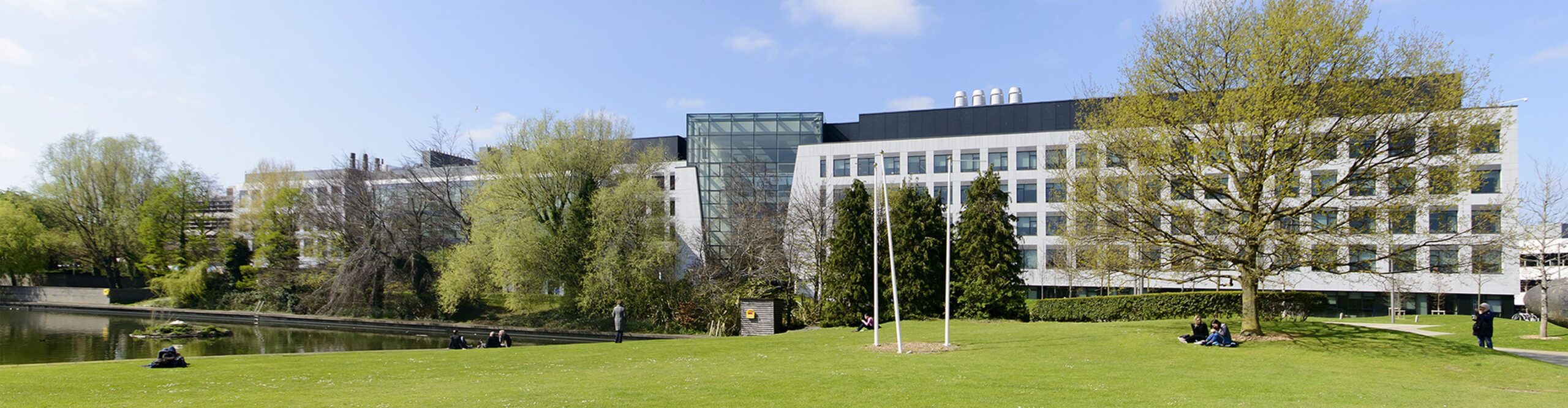
MSc Chemistry (Negotiated Learning)
The MSc Chemistry (Negotiated Learning) is a flexible course that offers a diverse array of modules in a variety of chemistry topics. The course is suitable for you if you wish to sample different sides of the discipline ranging from the mathematical, physical and materials disciplines to the biological end of the scientific spectrum.
Duration
1 year (Full – time)
2 years (Part – time)
Starting Date
September
Tuition Fee
For information about tuition fees, please contact UCD using the enquiry form.
Location
Dublin, Ireland
About the programme
The MSc Chemistry (Negotiated Learning) from the University College Dublin offers initial academic advice to ensure that your module choices can match your career aspirations or areas of interest.
If you wish to broaden your understanding of chemistry, you could choose a range of modules across the discipline. If you are interested in progressing to a PhD programme, or into particular industries, you may choose to concentrate on a specific area, e.g., chemical biology, nanochemistry, medicinal, sustainable or materials chemistry.
The UCD School of Chemistry has vibrant research in areas such as catalysis and new transformations, bionano interface, advanced spectroscopy, new materials for magnetic, medicinal, and electronic applications, and carbohydrate chemistry.
Career opportunities:
The MSc Chemistry (Negotiated Learning) provides a basis for graduates to enter the chemical, pharmaceutical, bio-pharmaceutical and materials industries. Analytical services, environmental protection and primary and secondary school teaching present other possible opportunities.
Furthermore, through judicious choice of modules within one particular sub-discipline of chemistry, the programme is an attractive route for some students into a PhD programme.
Programme Structure
Sample Modules and Topics (Subject to change and are not guaranteed by UCD):
- Advanced Synthetic Organic and Inorganic Chemistry
- Materials Chemistry
- Advanced Spectroscopy
- Advanced Crystallography
- Commercialisation of Laboratory Research
- Biological, Medicinal and Pharmaceutical Chemistry
- Sustainable and Environmental Chemistry
- Nanochemistry
- Biophysical Chemistry
- Polymer Chemistry
- Computational Chemistry
Admissions Requirements
- This programme is intended for applicants with an honours undergraduate Chemistry degree, or a degree with a significant component of chemistry (NFQ Level 8 or equivalent). An upper second-class honours or international equivalent is required. However, all applicants will be assessed on a case-by-case basis and relevant or extensive work experience will be taken into account, so that in certain exceptional cases an award at a lower level or a 2.2 classification may be considered.
- Applicants whose first language is not English must also demonstrate English language proficiency of IELTS 6.5 (no band less than 6.0 in each element), or equivalent. Students meeting the programme’s academic entry requirements but not the English language requirements, may enter the programme upon successful completion of UCD’s Pre-Sessional or International Pre-Master’s Pathway programmes.
- These are the minimum entry requirements – additional criteria may be requested for some programmes
Student Testimonial

I chose to undertake the MSc Chemistry (Negotiated Learning) course as a pathway to both refreshing and improving my chemistry knowledge with hopes that it would lead to further career and postgraduate opportunities. In my time at UCD, I was challenged by a broad range of topics in organic, inorganic and physical chemistry, whilst interacting with lecturers and professors and gaining insight to the requirements of further postgraduate study in a PhD. The climate in UCD School of Chemistry was welcoming and supportive, with the Chemistry Society providing a way to meet peers and colleagues that are still in my life to this day. The final lab project is an important aspect of the course and helped to reintegrate me into a research environment and eventually led to undertaking a PhD in chemistry. This has helped me in my career by allowing me to travel to France and Germany in a research capacity and find an exciting role as a Process Development Scientist in Ireland.
Cillian O’Beirne, Process Development Scientist
Other interesting programmes
-
-

BSc Sport, Health and Exercise Science (Hons)
- With the Sport, Health and Exercise Science (Hons) programme from University College Dublin, led by top industry professionals in state-of-the-art facilities, you will…
With the Sport, Health and Exercise Science (Hons) programme from University College Dublin, led by top industry professionals in state-of-the-art facilities, you will study the scientific principles underlying the promotion and enhancement of sport, physical health and exercise across the lifespan.
-
-
-
BSc Sport and Exercise Management (Hons)
- Turn your passion for sport into the skills to lead it. The global sport and exercise industry needs more than…
Turn your passion for sport into the skills to lead it. The global sport and exercise industry needs more than enthusiasm. It needs people who understand how to manage organisations, develop programmes, engage communities, deliver events and respond to a rapidly changing industry.
-
-
-

MSc Management (Online)
- This exciting programme offers you all the benefits of a comprehensive management education without putting your career on hold thanks…
This exciting programme offers you all the benefits of a comprehensive management education without putting your career on hold thanks to its highly flexible online delivery mode, and innovative curriculum and learning resources.
-
-
-
MSc Chemistry (Negotiated Learning)
- The MSc Chemistry (Negotiated Learning) is a flexible course that offers a diverse array of modules in a variety of…
The MSc Chemistry (Negotiated Learning) is a flexible course that offers a diverse array of modules in a variety of chemistry topics. The course is suitable for you if you wish to sample different sides of the discipline ranging from the mathematical, physical and materials disciplines to the biological end of the scientific spectrum.
-
-
-

MSc Computer Science (Negotiated Learning)
- The MSc in Computer Science by Negotiated Learning is a uniquely flexible and innovative programme. It offers a customisable learning…
The MSc in Computer Science by Negotiated Learning is a uniquely flexible and innovative programme. It offers a customisable learning model for students with an ICT background, allowing you to tailor your educational path to meet your specific needs and career aspirations.
-
-
-

MSc Biotechnology
- The MSc Biotechnology at University College Dublin is a one-year, full-time programme designed to deepen your understanding of the principles…
The MSc Biotechnology at University College Dublin is a one-year, full-time programme designed to deepen your understanding of the principles and applications of biotechnology. This degree, awarded at NFQ Level 9, offers an in-depth exploration of the biotechnology sector, which is vital to Ireland's economy and global standing in biopharmaceuticals.
-
-
-

MSc Urban Design and Planning
- The Urban Design and Planning course at University College Dublin will enable graduates to work as part of a multidisciplinary team to create better…
The Urban Design and Planning course at University College Dublin will enable graduates to work as part of a multidisciplinary team to create better places through urban design.
-
-
-
MSc Sport Management (Sport)
- Move from following the sport industry to helping lead it. Sport is a global industry shaped by commercial pressure, changing…
Move from following the sport industry to helping lead it. Sport is a global industry shaped by commercial pressure, changing audiences, new technologies, governance challenges and the pursuit of high performance. Passion can motivate you to enter the industry, but building a successful management career requires more.
-
-
-
MSc Restoration Ecology – Negotiated Learning
- This Restoration Ecology - Negotiated Learning from University College Dublin is the first programme of its kind in Ireland dedicated specifically to…
This Restoration Ecology - Negotiated Learning from University College Dublin is the first programme of its kind in Ireland dedicated specifically to restoration ecology and ecosystem recovery.
-
-
-
MSc Precision Medicine
- The Precision Medicine at University College Dublin is a one-year, full-time programme designed to equip students with advanced knowledge in…
The Precision Medicine at University College Dublin is a one-year, full-time programme designed to equip students with advanced knowledge in genomically informed medicine. This course offers a comprehensive curriculum, blending clinical research with practical applications, preparing graduates for impactful careers in healthcare and biotechnology.
-
-
-
MSc One Health
- This One Health from University College Dublin will equip graduates with the skills, knowledge and capabilities to have successful careers in this…
This One Health from University College Dublin will equip graduates with the skills, knowledge and capabilities to have successful careers in this exciting and rapidly growing field.
-
-
-

MSc Healthcare Informatics
- The Healthcare Informatics at University College Dublin is a full-time, one-year programme designed for those in healthcare and IT sectors.…
The Healthcare Informatics at University College Dublin is a full-time, one-year programme designed for those in healthcare and IT sectors. This course equips students with essential skills in medical informatics, enabling them to effectively utilise technology in healthcare settings.
-